Medical treatments
GP, trichologist or dermatologist
Three titles, and only two of them are doctors. The NHS starting point is the GP.
Written in the UK, for women and men.
See a GP if you are worried about hair loss, and before a commercial clinic. A dermatologist is a doctor on the specialist register, usually seen after a referral. A trichologist is a hair specialist who is not a medical doctor unless they also hold a medical qualification. The Institute of Trichologists is a professional body, not the GMC.
See a GP if hair loss is sudden, patchy, or comes with illness, a rash, or other symptoms. The NHS asks for that conversation before a private clinic.
Hair loss is full of people who will see you this week if you pay. The useful question is who can actually change the diagnosis.
Start with a GP
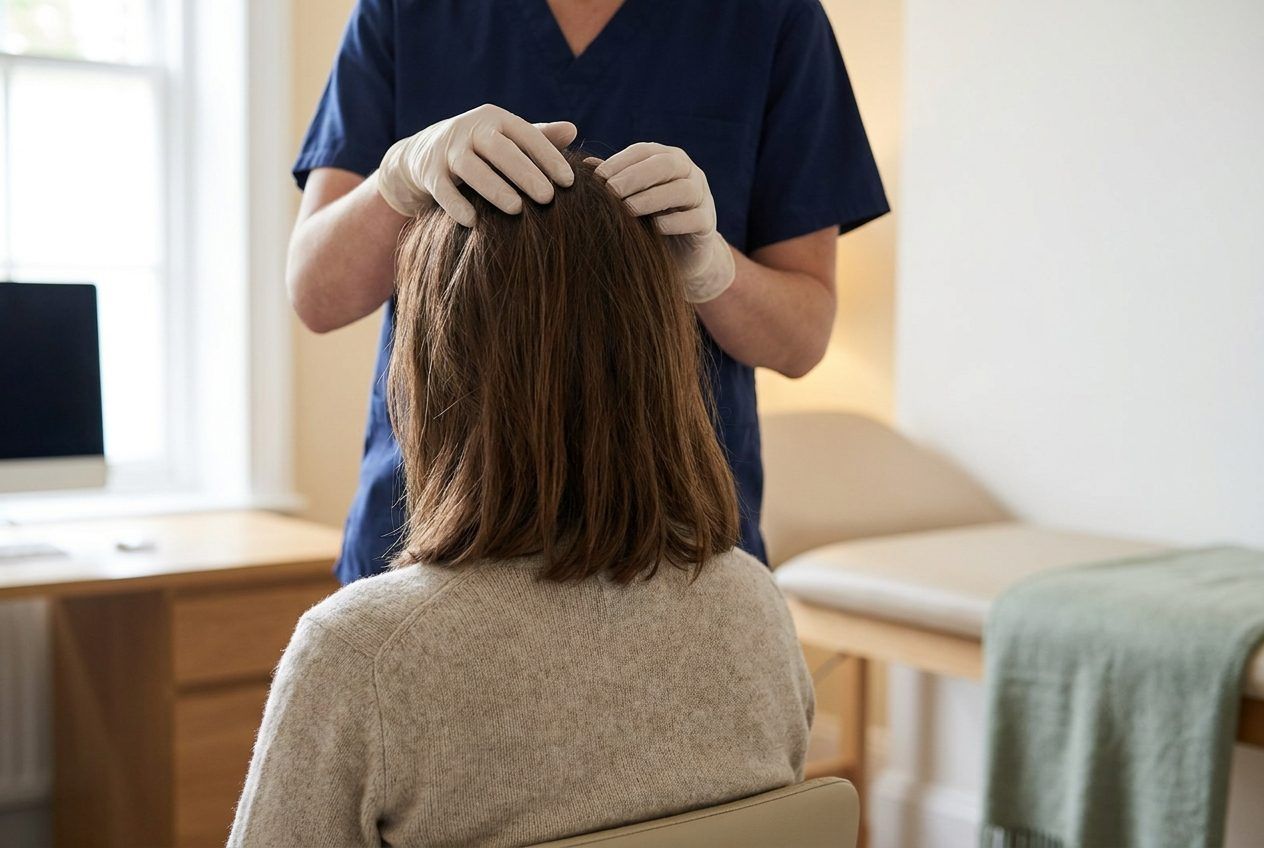
The NHS says to see a GP if you are worried, and to do that before a commercial clinic. The GP looks at the hair, hears whether you are tired, losing weight, recently ill, or recently pregnant, and can request bloods. Iron deficiency and thyroid disease are treated in primary care. Pattern loss can be recognised in the same appointment. Referral to dermatology is how patchy loss, scarring, or severe alopecia areata reaches a specialist.
NICE CKS says male pattern loss is a clinical diagnosis, and that thyroid tests, a full blood count, ferritin and vitamin D are worth considering when the picture is atypical. A GP is set up for that. A shop is not.
A dermatologist
A dermatologist is a doctor with specialist training, regulated through the General Medical Council. On the NHS you usually need a referral. They manage alopecia areata, scarring alopecias, and uncertain rashes. NICE’s recommendation of ritlecitinib for severe alopecia areata is a specialist pathway, not a high-street one.
A trichologist
A trichologist has studied hair. Some are excellent at describing shedding and scalp care. The title is not a medical degree. The Institute of Trichologists keeps a professional list. It is not the GMC. A listing there is not a medical licence. If a brand offers a trichologist consultation, that is the brand’s service. It is not a diagnosis from this website.
Use a trichologist for hair-fibre and routine scalp questions if you want to. Use a GP when you need to know whether you are ill. Use a dermatologist when the GP says the scalp needs one.
Common questions
Should I see a trichologist first?
See a GP first if the loss worries you, is sudden or patchy, or comes with other symptoms. A trichologist is an optional extra, not a replacement for that.
Can a trichologist prescribe finasteride?
Only if they are also a prescriber, such as a doctor. The title trichologist does not itself confer a medical licence.
What can a GP do?
Look at the scalp, arrange blood tests, treat iron deficiency or thyroid disease, refer you to dermatology, and tell you which treatments are not on the NHS.
Sources
Keep reading
-

-
-

-