Hair health
Hair health and nutrition
Food, rest and how you treat the scalp. Useful, ordinary, and not a substitute for a diagnosis.
Written in the UK, for women and men.
Hair is made from the food you already eat. The NHS balanced diet includes protein foods, and iron-rich foods matter if you are low in iron. No eating plan on the NHS is a cure for pattern hair loss. Stress and illness can trigger a temporary shed.
See a GP if hair loss is sudden, patchy, or comes with illness, a rash, or other symptoms. The NHS asks for that conversation before a private clinic.
Hair health is the unglamorous layer under the products: enough protein, enough iron if you are low, a scalp that is not inflamed, and a life that is not a prolonged physical stress.
What belongs in this section?
| Topic | The NHS-shaped version |
|---|---|
| Food | A balance of vegetables, starchy foods, dairy or alternatives, and protein foods. |
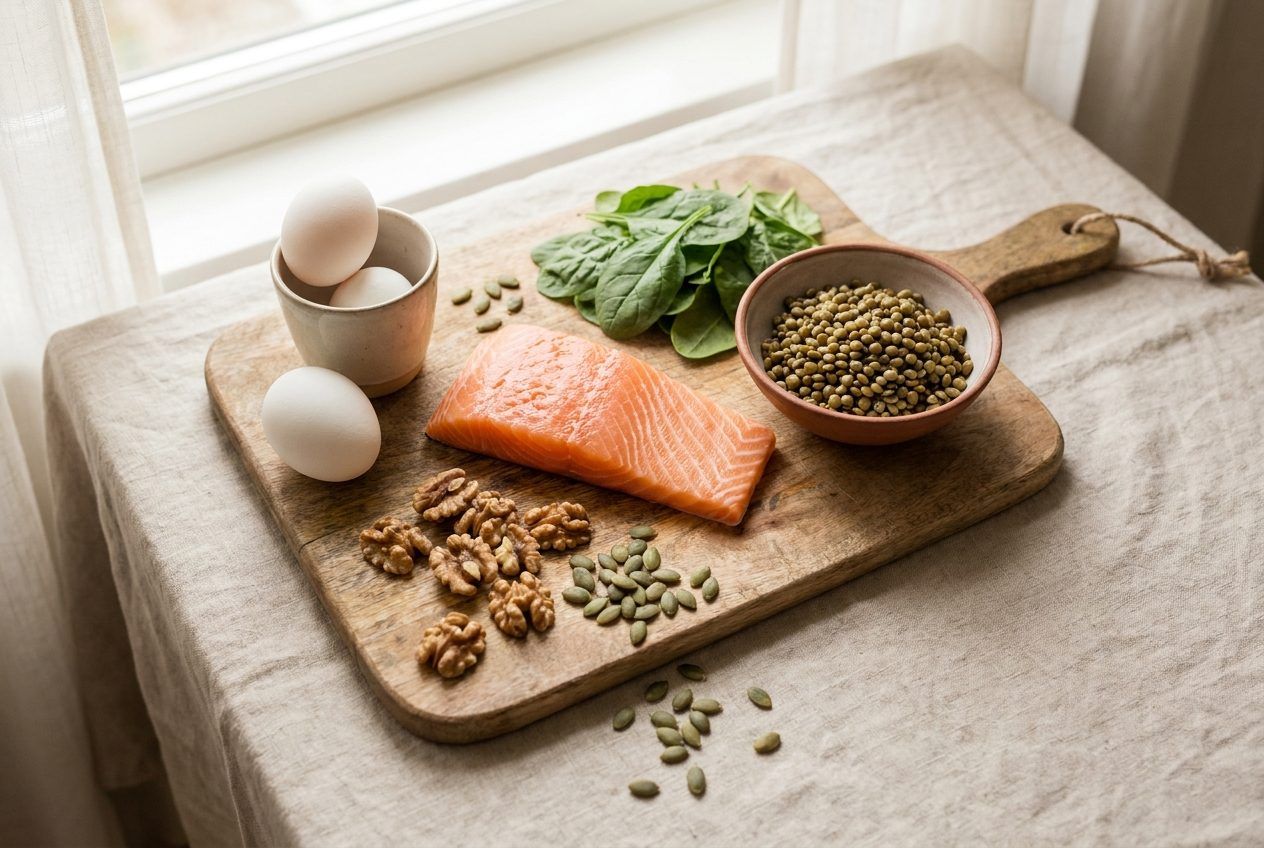
| Protein | Meat, fish, eggs, beans and pulses. The body uses protein to grow and repair. |
| Iron | Leafy greens, fortified cereals, meat, dried fruit, pulses, if a clinician has said iron is the issue. |
| Stress and illness | The NHS lists both among causes of temporary hair loss. |
| Washing and heat | Keep the scalp comfortable. Tight styles and harsh processing are a traction problem, not a vitamin problem. |
Read foods for hair growth before you buy a powder, and stress, sleep, washing and heat before you blame the shampoo.
In this section
-
-
Common questions
Can diet reverse male or female pattern hair loss?
The NHS does not describe pattern hair loss as a diet problem. Diet matters when a shortage, weight loss or illness is driving a shed.
How much vitamin D should I take for my hair?
The NHS vitamin D advice is about bones: 10 micrograms a day in autumn and winter for most adults. It is not a hair-growth dose.
Does washing too often cause hair loss?
The NHS says dandruff is not caused by poor hygiene. It does not set a universal wash schedule. Wash for your scalp, and get flakes checked if they persist.
Sources
Keep reading
-
-