Red light therapy
Clinic red light or a home device?
Clinic pages sell a chair. The trials mostly sold a habit: the same light, on a schedule, for months. Here is how to choose without a directory.
We compare hats on wavelengths, published output, coverage, session time, published clinical evidence, UK price, warranty and returns. How we review.
A clinic red-light session is not automatically better than a home device. The trials that found more hair than a sham device used a set schedule for months, often a device the person used themselves. Whether a clinic is worth it depends on the device, the wavelength and dose, who has diagnosed the hair loss, and the cost of the whole course. This page has no single UK clinic price, and it recommends no clinic and no brand.
See a GP or doctor if hair loss is sudden, patchy, or comes with illness, a rash, or other symptoms. The NHS asks for that conversation before a private clinic.
On this page
On this page
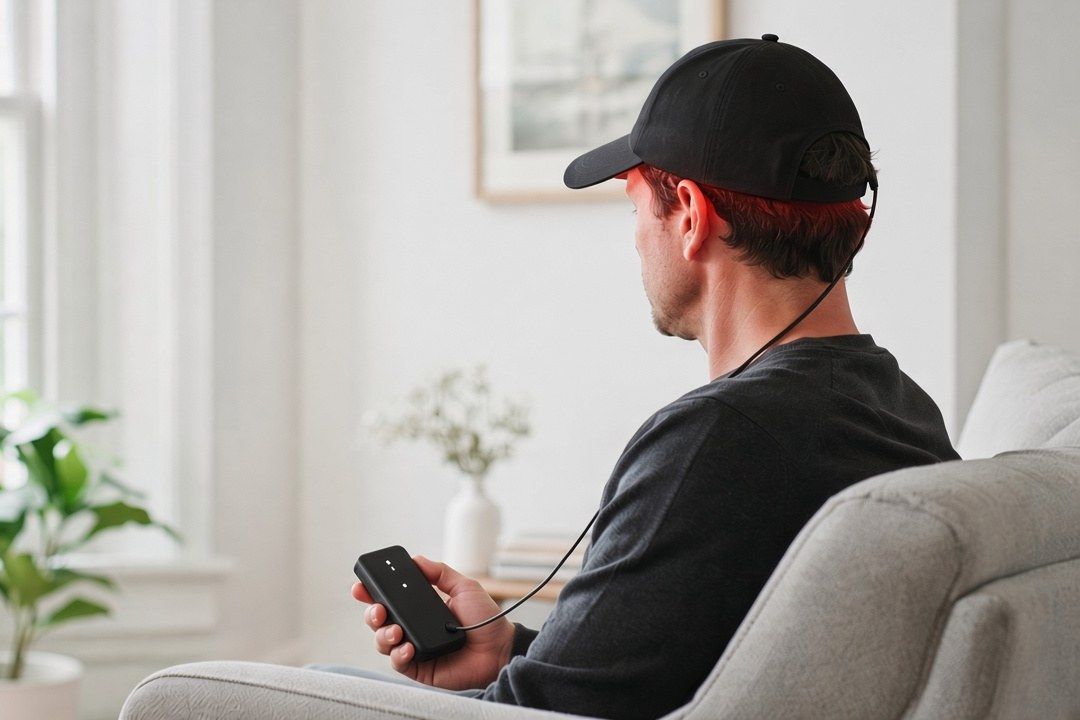
Choose on the device and the course, not on whether the chair is in a clinic. The studies that found more hair with low-level red light or laser than with a sham device used a repeated schedule over months. Many of those devices were used at home. A single salon visit is not that experiment. This page names no clinic as a recommendation, and it names no brand of cap.
What were the trials actually doing?
Perez and colleagues pooled studies of pattern hair loss and found higher average hair density with the light than with placebo. The stronger counts sit at about 16 to 26 weeks. A one-off appointment cannot be scored against that.
Leavitt and colleagues used a comb for 15 minutes, three times a week, for 26 weeks, in 110 men, against a sham comb. That is a home schedule. Pillai and Surendran describe the wider literature as usually 15 to 20 minutes, three times a week, for six months, with wavelengths often from 650 to 1200 nanometres and a wide span of power. Liu and colleagues found the benefit in both comb-type and helmet-type devices. The type of box mattered less, in that pooled analysis, than whether the light was real and the trial was controlled.
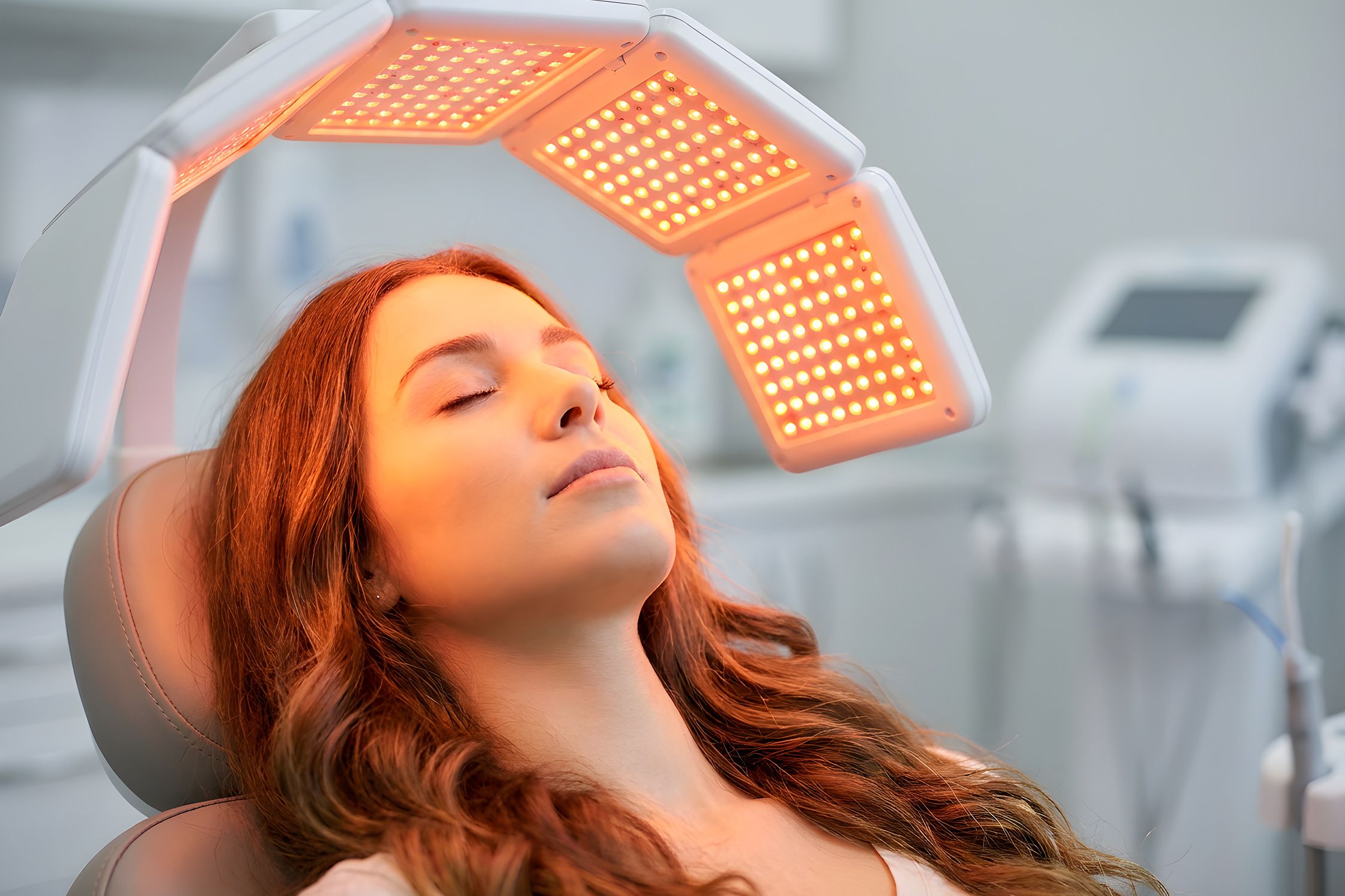
A clinic panel can be a perfectly reasonable way to deliver a similar wavelength. It can also be a red lamp with no stated irradiance, booked as a course of facials. The room does not tell you which. The questions do.
What to ask before you pay
Write the answers down. A clinic that cannot answer them is selling atmosphere.
What is the device, in words a third person could look up? “Medical-grade red light” is not a specification. Wavelengths in nanometres, and whether the machine states an output in milliwatts per square centimetre, are the specifications. How those numbers relate to the research band is in how to choose. A chart of the research band, without a brand attached, lives on the red light pillar.
How long is one session, and how many sessions a week, for how many weeks? Put the weekly minutes next to the schedules above. The reason more minutes are not automatically better is session length.
Who decided this is pattern hair loss? A therapist operating a lamp is not a diagnosis. The NHS says to see a GP if you are worried, especially before a private clinic, and it does not provide red-light caps. Sudden, patchy, or ill is a GP visit, whether or not a course is already booked.
What is the price of the whole course, including any “review” visits, not the price of session one? If the course is shorter than four months, ask what result they think a shorter course can show, given that the trials waited longer.
What about the money?
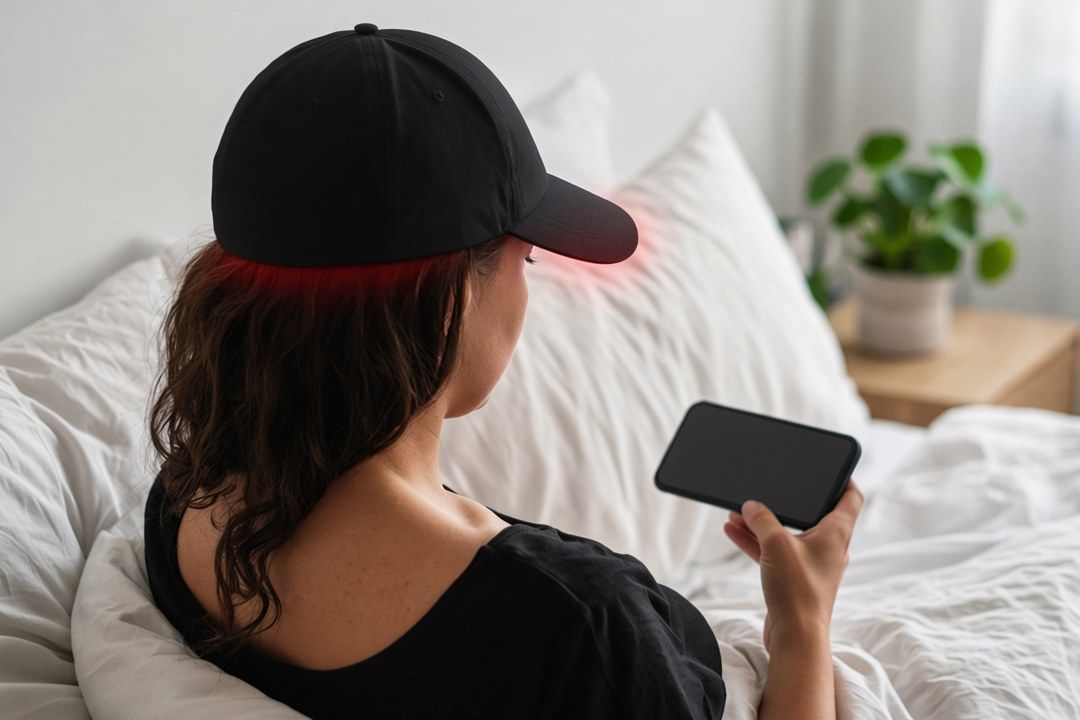
Home devices have shelf prices. They are on the red light hats comparison and on laser caps, LED combs and massagers, with the date those prices were checked. This page does not repeat a brand price, because the choice here is clinic course versus home hardware, not a product pick. Read those pages if you want the hardware numbers. Warranties and return windows matter as much as the sticker, because a device that fails in week six never reaches the 16-week count.
Clinic prices are a different problem. Each business sets its own. This page does not have a verified tariff that represents UK clinics, and it will not average two advertisements into a fake national fee. If a clinic will not give a written total for a defined number of sessions, you cannot compare it with a home device at all.
A fair personal sum is simple, and it uses your quote rather than ours. Take the clinic’s price for a course long enough to reach about 16 to 26 weeks. Put it next to a home device you would actually use on a similar weekly schedule, from the pages above. Add travel, and add whatever you would do if the clinic course ends and you are told to maintain it. A cheap first session that leads to an open-ended booking is not the cheap option.
A comparison you can actually finish
Do the arithmetic with the quote in front of you. Write four lines.
The device: wavelengths and any stated output, or “not stated”. If it is not stated, you cannot place it next to the 650 to 1200 nanometre description in the Pillai review, and you should say so on the page rather than guess.
The schedule: minutes per session, sessions per week, and weeks until you would judge it. Multiply minutes by sessions to get a weekly total, and set that next to the trial habits above, including the 15 minutes three times a week in the comb study. Session length explains why beating that weekly total on purpose is not a smarter plan.
The money: the clinic’s figure for the full run of weeks, against a home device from the hat or laser-cap pages, plus the bus fare or the parking. If the clinic will only price “from” a single visit, you do not yet have a course cost. Leave the cell blank. An invented average would be worse than a blank.
The diagnosis: who said this is pattern loss, and what they told you to do if it is not. A lamp does not answer alopecia areata, a post-illness shed, or a widening parting that needs blood tests.
That sheet is the whole comparison. It will look different for every reader, which is why this page refuses a single “worth it” verdict.
When a clinic session is the sensible experiment
Three situations are honest.
You want to know whether you will sit still for 15 or 20 minutes, several times a week, before you buy hardware. One or two sessions answer the boredom question. They do not answer the hair-count question.
The light is bundled with someone who has already examined the scalp and told you what kind of loss you have. The value then is the examination, and the light is an extra. Ask which part of the bill is which.
You cannot use a home device safely or consistently, for example because of the way the scalp is, or because you will not keep the schedule. In that case a supervised course is a practical choice, still judged at the same number of weeks, still not a cure.
When the home device is the clearer match to the trials
You have a pattern loss a clinician is content to call pattern loss. You can keep a schedule. The device states a red wavelength in the band the trials used, and you understand you are not wearing “the” device from a named paper unless the paper used that device. Does it work? is the evidence page, including the point that shop models were not automatically the machines in the studies.
Do not run a clinic course and a home device on the same days to “add them up”. Dose is irradiance times time. Stacking two unknown doses is how you leave the range the trials described.
Minoxidil remains the medicine the NHS names for pattern loss. Light does not replace a conversation about that medicine. The comparison of the two approaches, without turning either into a promise, is red light or minoxidil.
Common questions
Are the hair-loss trials mostly clinic visits?
Many of the sham-controlled studies used a device at home, such as a comb or a helmet, on a fixed schedule for 16 to 26 weeks. A clinic can use a panel or a hood. The result still depends on repeating a known dose, not on the room looking medical.
What should I ask a clinic before I book?
What device is it, what wavelengths does it state, how long is a session, how many sessions are in the course, who has actually diagnosed the hair loss, and what is the total price of that course. A per-session teaser without the course length is not a comparison.
How much does a UK clinic session cost?
This page does not give a figure. Advertised clinic prices for red light on the scalp were not consistent enough, on sources we could verify, to quote a range without inventing an average. Ask the clinic for a written course quote.
When is a home device the clearer choice?
When you already know the hair loss is a pattern, you can keep a schedule for months, and the device states a wavelength and output you can compare with the trials. Home hardware is compared on the hats page and the laser caps page. Those pages are not a clinic list.
Sources
Keep reading
-
-
-
-
-