Causes
Iron deficiency and hair loss
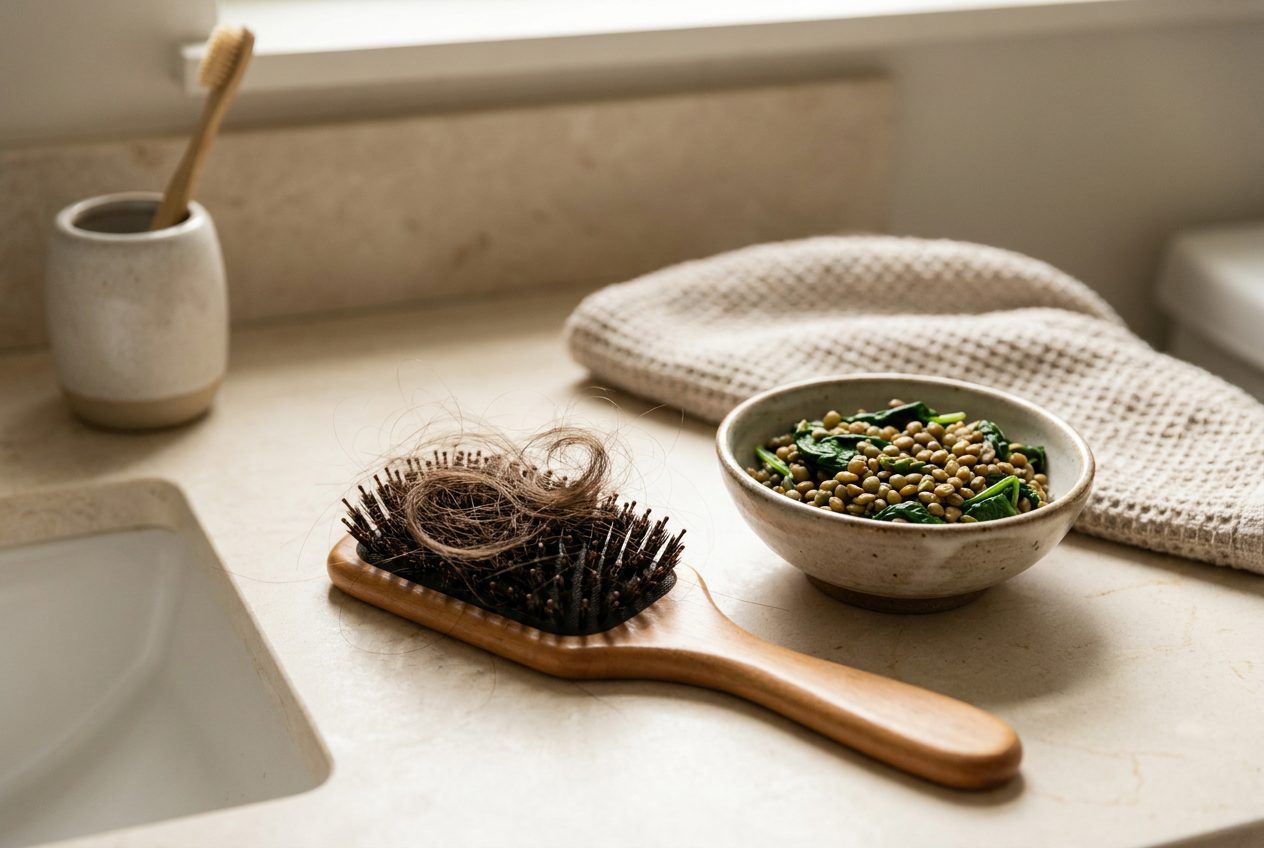
More hair in the brush can be a blood problem. The test is a GP’s, and the tablet is theirs too.
Written in the UK, for women and men.
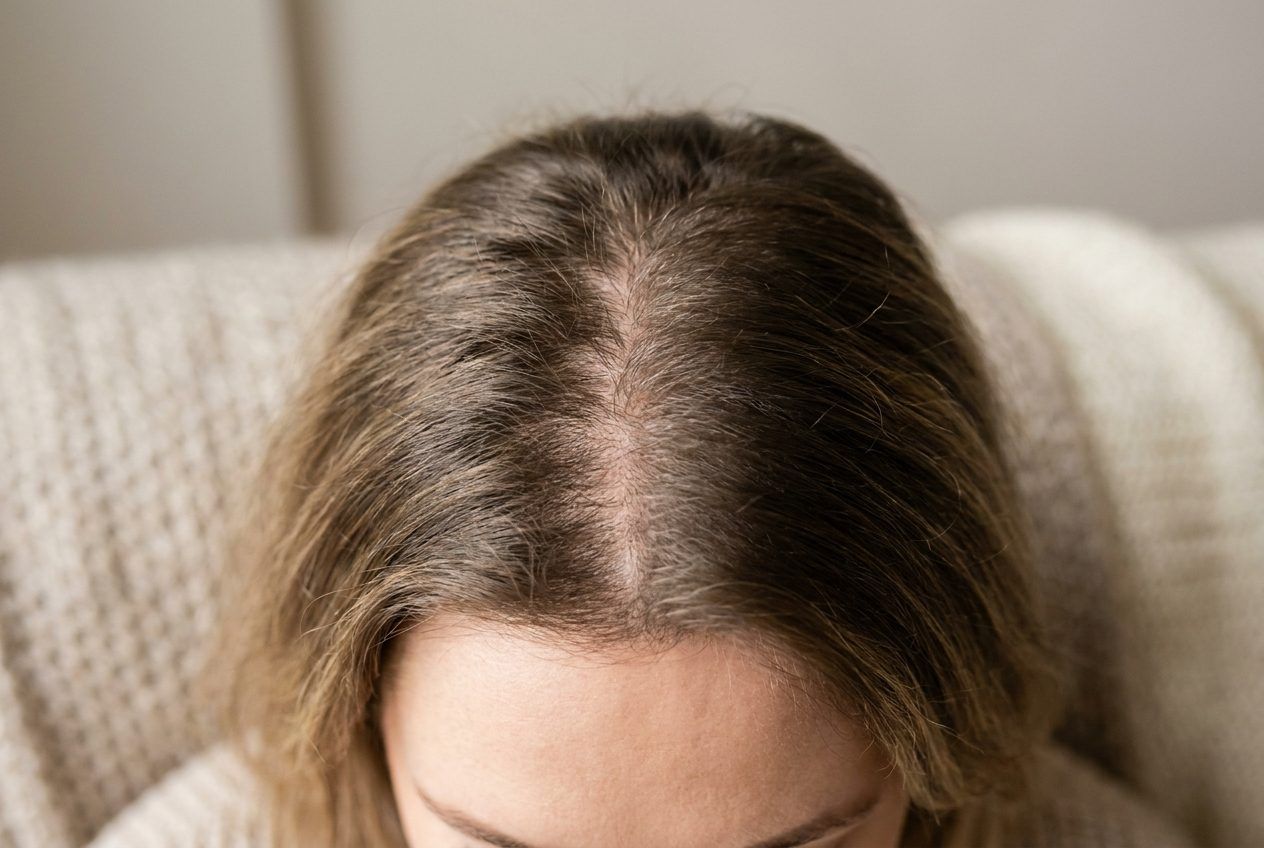
The NHS lists hair loss as a less common symptom of iron deficiency anaemia: you notice more hair coming out when you brush or wash it. See a GP. The usual check is a full blood count, and treatment for a low count is iron tablets for about six months, plus the cause. A ferritin cutoff of 70 is not an NHS threshold.
See a GP if hair loss is sudden, patchy, or comes with illness, a rash, or other symptoms. The NHS asks for that conversation before a private clinic.
Iron deficiency anaemia is the most common anaemia. The NHS says it comes from a lack of iron, often blood loss or pregnancy. The familiar symptoms are tiredness, breathlessness, palpitations, paler skin and headaches. Hair loss is on the less common list: you notice more hair coming out when you brush or wash it.
What should happen next?
See a GP if you think you might have it. The usual test is a full blood count. You do not prepare for it. The same test looks for B12 and folate deficiency. If the reason is unclear, there may be further tests, including a check for blood in the stool, or a referral.
If the red-cell count is low, iron tablets replace what is missing. The NHS says you will need them for about six months. Orange juice with a tablet may help absorption. Side effects include constipation, diarrhoea, stomach pain, heartburn, nausea and darker stools. Take them as the GP advises, including with food if that reduces side effects. Keep the tablets away from children. An iron overdose in a young child can be fatal.
The cause still needs treating. Heavy periods and pregnancy are very common reasons. So is bleeding in the gut, from anti-inflammatory painkillers, ulcers, bowel inflammation, piles, or, less often, cancer. “My hair is thin” does not skip that list.
What about food?
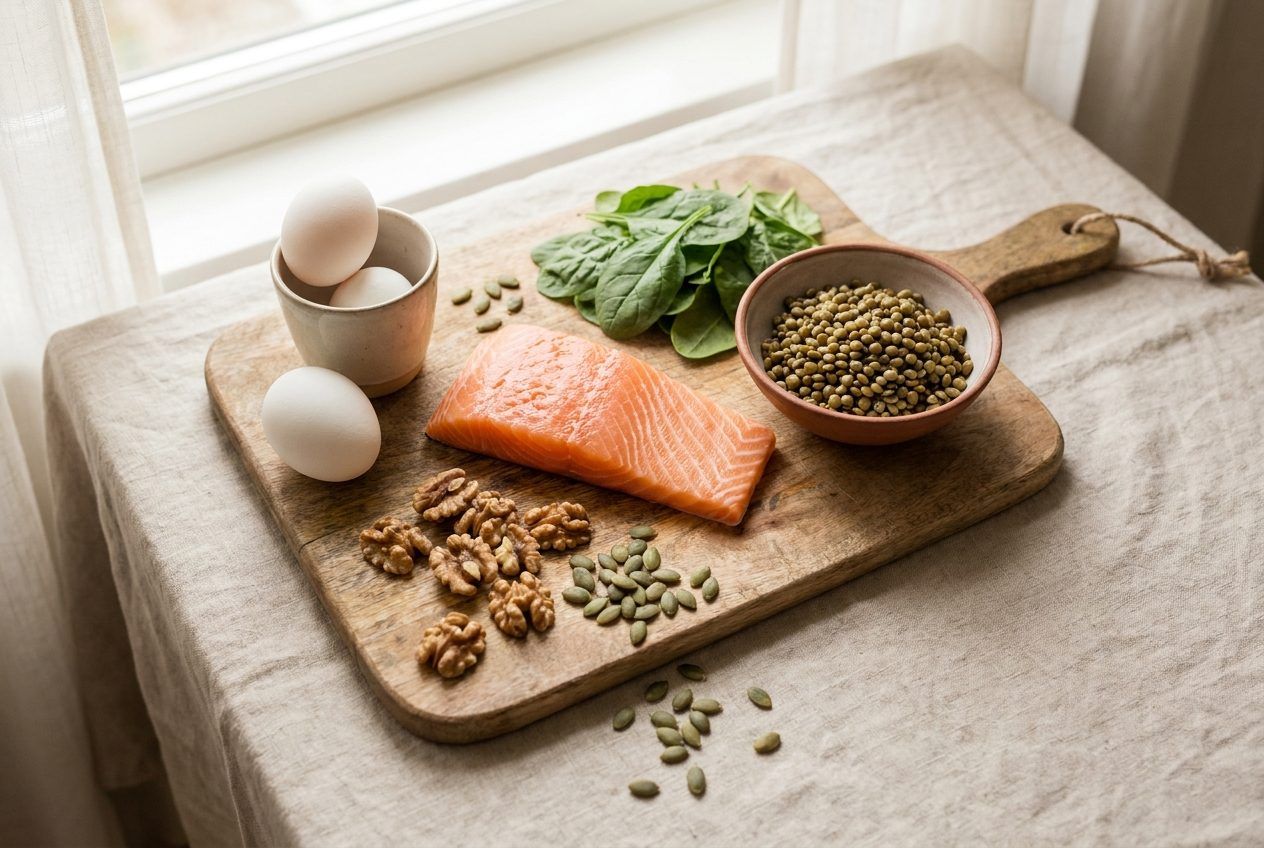
If diet is part of the cause, the NHS suggests more dark-green leafy vegetables, fortified cereals and bread, meat, dried fruit such as apricots, prunes and raisins, and pulses. Large amounts of tea, coffee, milk and dairy, and foods high in phytic acid such as wholegrain cereals, make iron harder to absorb. A dietitian is an option if eating enough iron is difficult.
Pattern hair loss can still be present. NICE CKS says that if male pattern loss looks atypical, clinicians consider thyroid tests, a full blood count, ferritin and vitamin D. That is a reason to test. It is not a number to chase with an online supplement.
Biotin gummies do not treat iron deficiency. The supplement overview is best supplements for hair growth.
Common questions
Can low iron make your hair fall out?
Yes. The NHS includes hair loss among the less common symptoms of iron deficiency anaemia, noticed when brushing or washing.
What test will a GP do?
Usually a full blood count. The NHS says you do not need to prepare for it. Other tests follow if the cause of the anaemia is unclear.
Should I aim for a ferritin of 70?
Not on the strength of this site. NICE CKS says clinicians may consider ferritin when male pattern loss looks atypical. It does not, on the page we used, set 70 as a hair target.
Sources
Keep reading
-
-
-
-