Topical treatments
Best shampoo for hair loss in the UK (2026)
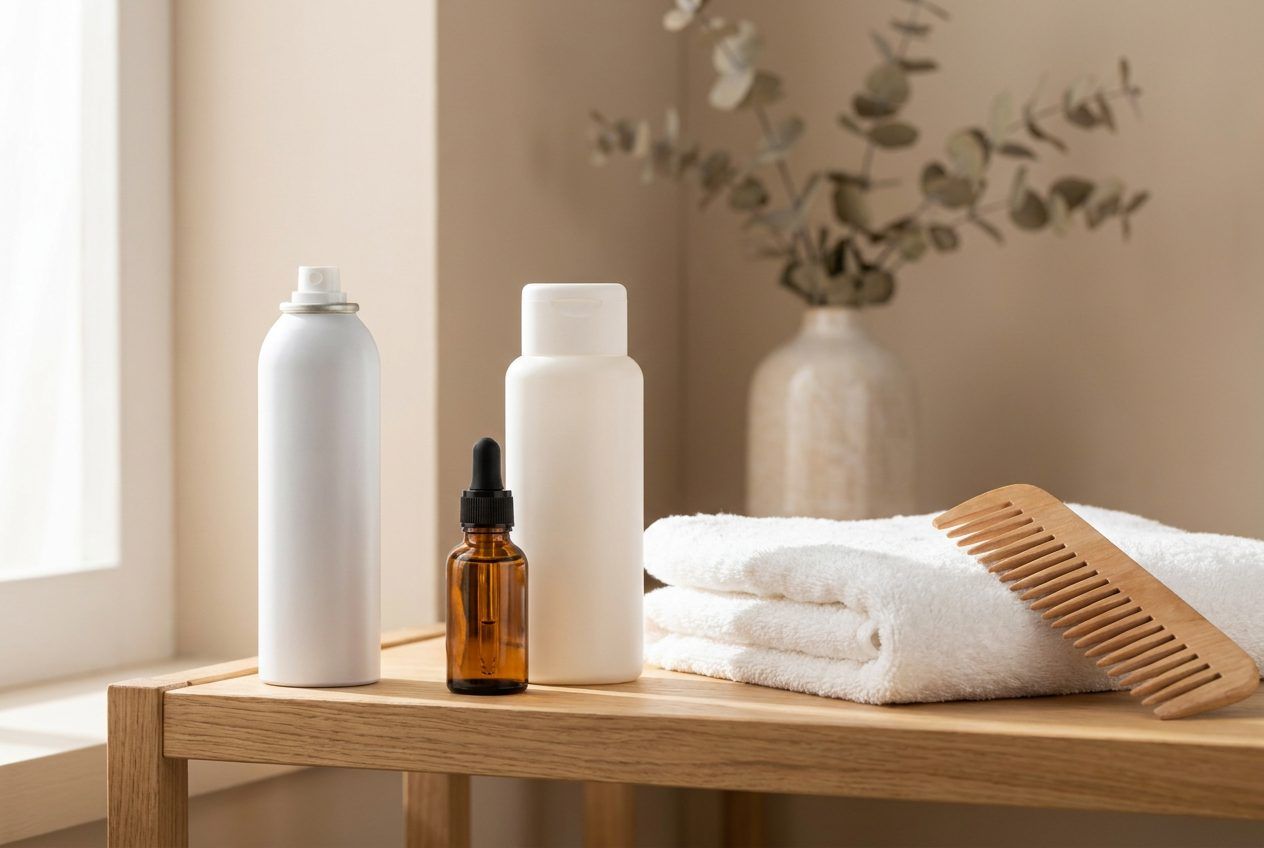
Pharmacy washes for a flaky scalp, set beside the caffeine and peptide shampoos sold for hair loss.
Written in the UK, for women and men.
See a GP if hair loss is sudden, patchy, or comes with illness, a rash, or other symptoms. The NHS asks for that conversation before a private clinic.
On this page
On this page
A shampoo washes the scalp. The NHS names ketoconazole, coal tar and salicylic acid when that scalp is flaky, and it names minoxidil for pattern hair loss. This page compares those two jobs.
How we compared shampoos
We compared NHS advice on dandruff with the caffeine and peptide washes sold for hair loss.
- NHS dandruff care Ketoconazole, coal tar or salicylic acid, for up to four weeks.
- Medicine or cosmetic A pharmacy treatment on one side, a cosmetic wash on the other.
- Pattern hair loss Minoxidil and, for men, finasteride: the treatments the NHS names for pattern hair loss.
- When to stop Four weeks without improvement, or a rash, is a GP visit.
Quick verdict
For a flaky scalp, the NHS names ketoconazole, coal tar or salicylic acid, used for up to four weeks. For pattern hair loss, the named treatments are minoxidil and, for men, finasteride. Caffeine shampoos are cosmetics.
What does the NHS actually recommend you wash with?
For dandruff, use an anti-dandruff shampoo from a pharmacy or supermarket. Look for ketoconazole, coal tar, or salicylic acid. A pharmacist can explain how to use it. Give it up to four weeks. You may need to try more than one.
See a GP if it is no better after four weeks, if the scalp is very itchy, red or swollen, or if flaky patches spread to the face or body. Dandruff is not poor hygiene, and you cannot catch it. Yeast that lives on the skin, eczema, stress and cold weather can all play a part. A red or silver rash with patchy hair loss can be ringworm. That is not a cosmetic shampoo problem.
Seborrhoeic dermatitis is the oilier, more widespread cousin, and the NHS table on the dandruff page names it when the scalp, face and other areas are scaly, itchy and red. Ketoconazole is aimed at that world. Pattern hair loss, on the NHS hair-loss page, is treated with minoxidil and, for men, finasteride.
What about caffeine and peptides?
Caffeine shampoos and peptide serums are cosmetics. The NHS hair-loss page names minoxidil for pattern hair loss. A slogan on the bottle is a marketing line. A trial is a separate document, and it has to be read on its own.
Pattern loss still points at minoxidil and, for men, finasteride. A red light hat is a device you wear, and blue light on some hats is sold as a scalp-comfort claim. Dandruff care stays with the pharmacy shampoos above. How the hats compare is on red light hats.
Common questions
Does ketoconazole shampoo regrow hair?
The NHS lists ketoconazole as a treatment for dandruff. A calmer scalp can make hair look better. Minoxidil is the treatment the NHS names for pattern hair loss.
What about caffeine shampoo?
Caffeine shampoo is a cosmetic. The NHS names minoxidil and, for men, finasteride for pattern hair loss.
When should shampoo failure mean a GP visit?
If dandruff is still there after four weeks, the scalp is very itchy, red or swollen, or you have flaky patches on the face or body. A red or silver rash with patchy hair loss can be ringworm.
Sources
Keep reading
-
-

-