Causes
Postpartum hair loss
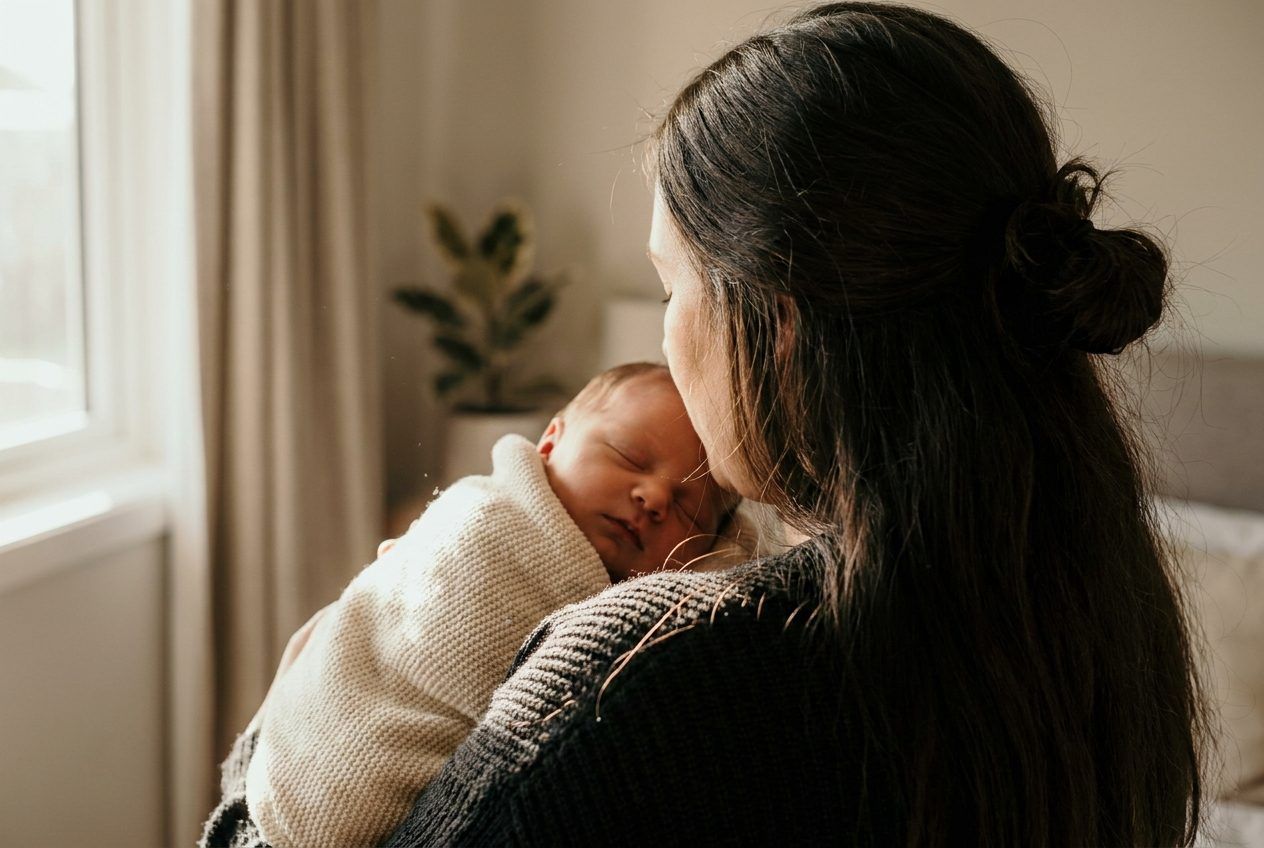
The hair that seemed thick in pregnancy often falls afterwards. That is a cycle change, not a surprise diagnosis.
Written in the UK, for women and men.
Postpartum hair loss is a telogen effluvium: a shed after the major body change of pregnancy and birth. The British Association of Dermatologists describes that kind of shed as extra hairs falling because the growth cycle was disrupted. It is not the same as female pattern hair loss, though the two can overlap. See a GP if you are worried, tired, or the loss is patchy.
See a GP if hair loss is sudden, patchy, or comes with illness, a rash, or other symptoms. The NHS asks for that conversation before a private clinic.
On this page
On this page
Plenty of women notice handfuls of hair a few months after birth. The medical name for that kind of fall is telogen effluvium. The British Association of Dermatologists explains it as more hairs leaving the scalp because illness, stress or a major body change has disrupted the cycle. Pregnancy and birth are that kind of change.
What is actually falling?
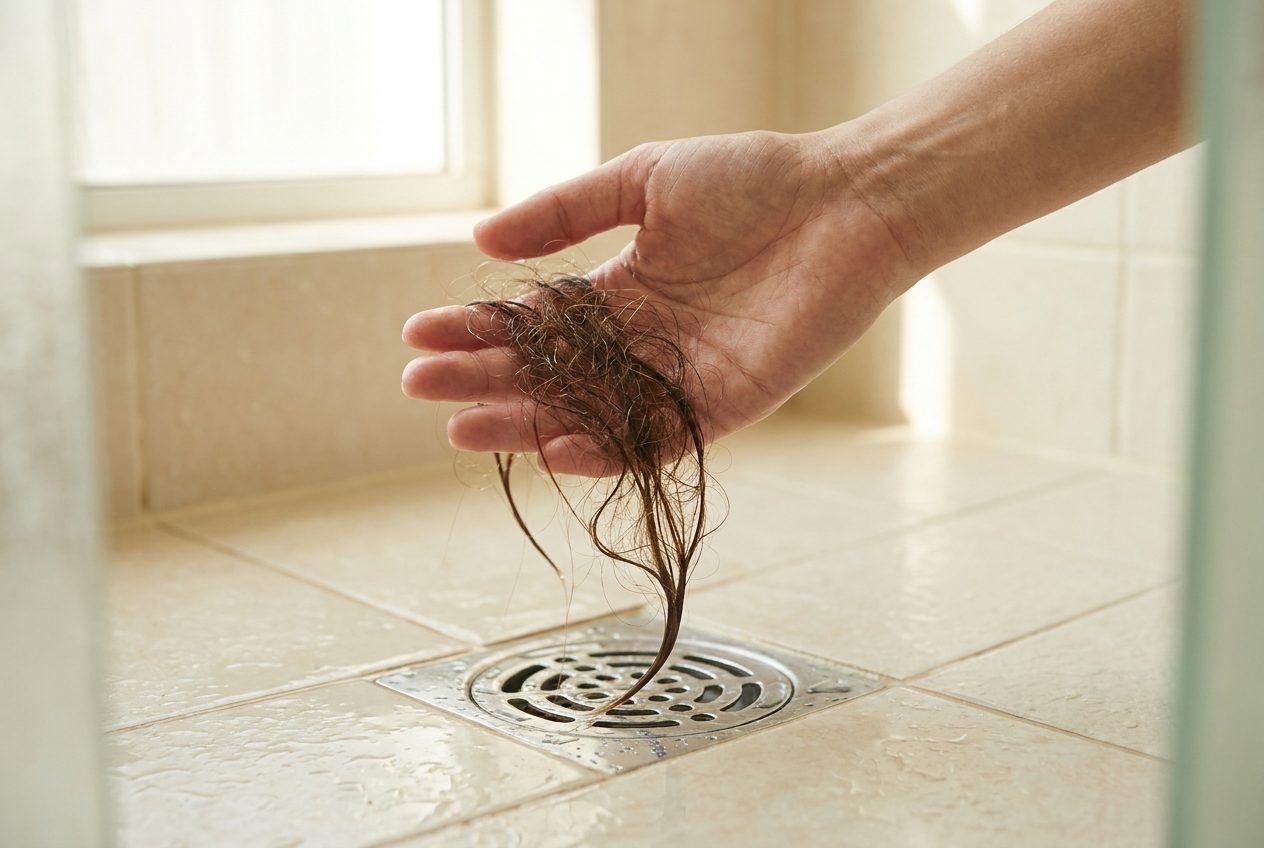
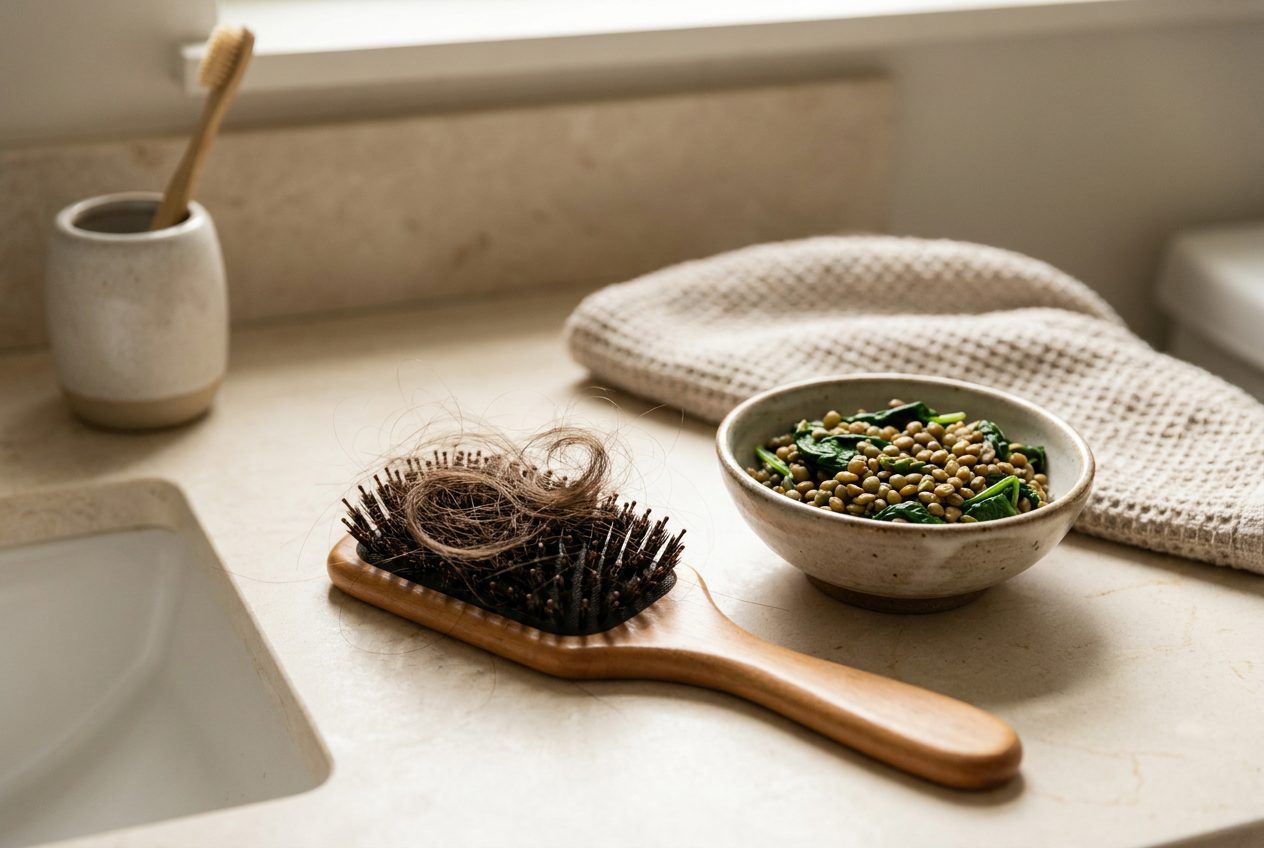
During pregnancy many women shed less, so the head of hair looks fuller. Afterwards, hairs that were held in the growing phase move on and fall. You notice it in the brush and the drain. The NHS says temporary loss of this sort often grows back once the cause has settled. The dermatologists’ leaflet does not give every woman the same finish date.
It is unusual for telogen effluvium alone to thin the hair enough to need a wig. If you are distressed, say so. The NHS says a GP can talk about counselling, and some wigs are available with a possible charge.
What else should be checked?
Iron deficiency anaemia is common in pregnancy, most often from diet, and hair loss is one of its less common symptoms. Heavy bleeding around birth is another reason iron falls. If you are exhausted, pale, or short of breath, that is a GP visit, not a hair oil.
Thyroid disease can also appear around pregnancy. An underactive thyroid includes hair loss in its symptom list. Mention a postpartum shed and any of those symptoms together.
What not to buy in a panic
A biotin gummy does not treat postpartum telogen effluvium. Female pattern hair loss, if it is also present, is the minoxidil conversation, and women should not use finasteride. Those pages are hair loss in women and does minoxidil work.
A red light hat is not a treatment for a postpartum shed. If pattern loss is the longer story, devices are a later, separate choice.
Common questions
Why does hair fall out after having a baby?
Pregnancy is a major body change. The British Association of Dermatologists says those changes can disrupt the hair cycle so that more hairs fall. The NHS lists illness and other stresses as temporary causes of the same kind of loss.
Should I take iron after the birth for my hair?
Only if you need it. The NHS says iron deficiency in pregnancy is often dietary, and hair loss can be a symptom of iron deficiency anaemia. A blood test, not a shop bottle, decides.
Is postpartum shedding female pattern hair loss?
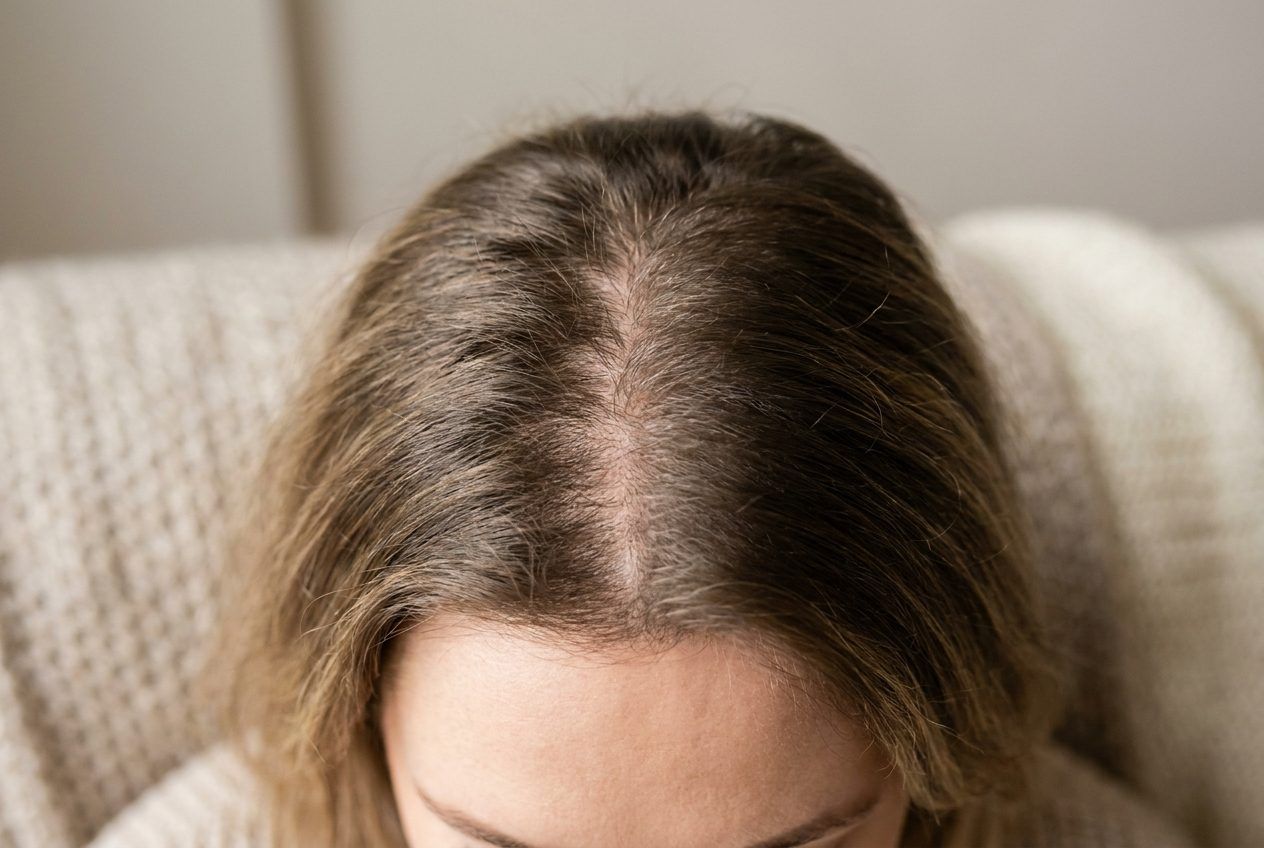
Not by itself. Female pattern loss is a widening parting that tends to persist. A postpartum shed can unmask it. A GP can tell them apart.
Sources
Keep reading
-
-
-
-