
News
Ritlecitinib and JAK inhibitors
The NHS JAK-inhibitor decision for severe alopecia areata, in plain English. Not a treatment for male pattern baldness.
Written in the UK, for women and men.
NICE TA958, published on 27 March 2024, recommends ritlecitinib for severe alopecia areata in people aged 12 and over, only if the company provides it according to the commercial arrangement. NICE TA926, published on 25 October 2023, does not recommend baricitinib for routine NHS commissioning for severe alopecia areata in adults. People already on baricitinib may continue until they and their doctor stop.
See a GP if hair loss is sudden, patchy, or comes with illness, a rash, or other symptoms. The NHS asks for that conversation before a private clinic.
JAK inhibitors are tablets that turn down a strand of immune signalling. Two of them have NICE decisions for severe alopecia areata. They are easy to mix up, and the decisions point in opposite directions.
Ritlecitinib
NICE TA958 was published on 27 March 2024. Ritlecitinib (Litfulo) is recommended as an option for severe alopecia areata in people aged 12 and over, only if the company provides it according to the commercial arrangement. NICE has described it as the first NHS treatment with this mechanism licensed for severe disease. “Recommended” still means a specialist judges the disease severe, and the supply terms are met. It does not mean a GP prints a prescription because you asked.
Baricitinib
NICE TA926 was published on 25 October 2023. Baricitinib (Olumiant) is not recommended for routine NHS commissioning for treating severe alopecia areata in adults. The drug has a licence. People who were already taking it may carry on until they and their doctor agree to stop. The trials NICE looked at are known as BRAVE-AA1 and BRAVE-AA2. This page does not quote a SALT score or a response rate from them. Those figures need the trial paper in front of you, and a percentage without the definition of “severe” and “response” is how headlines mislead.
What the condition is
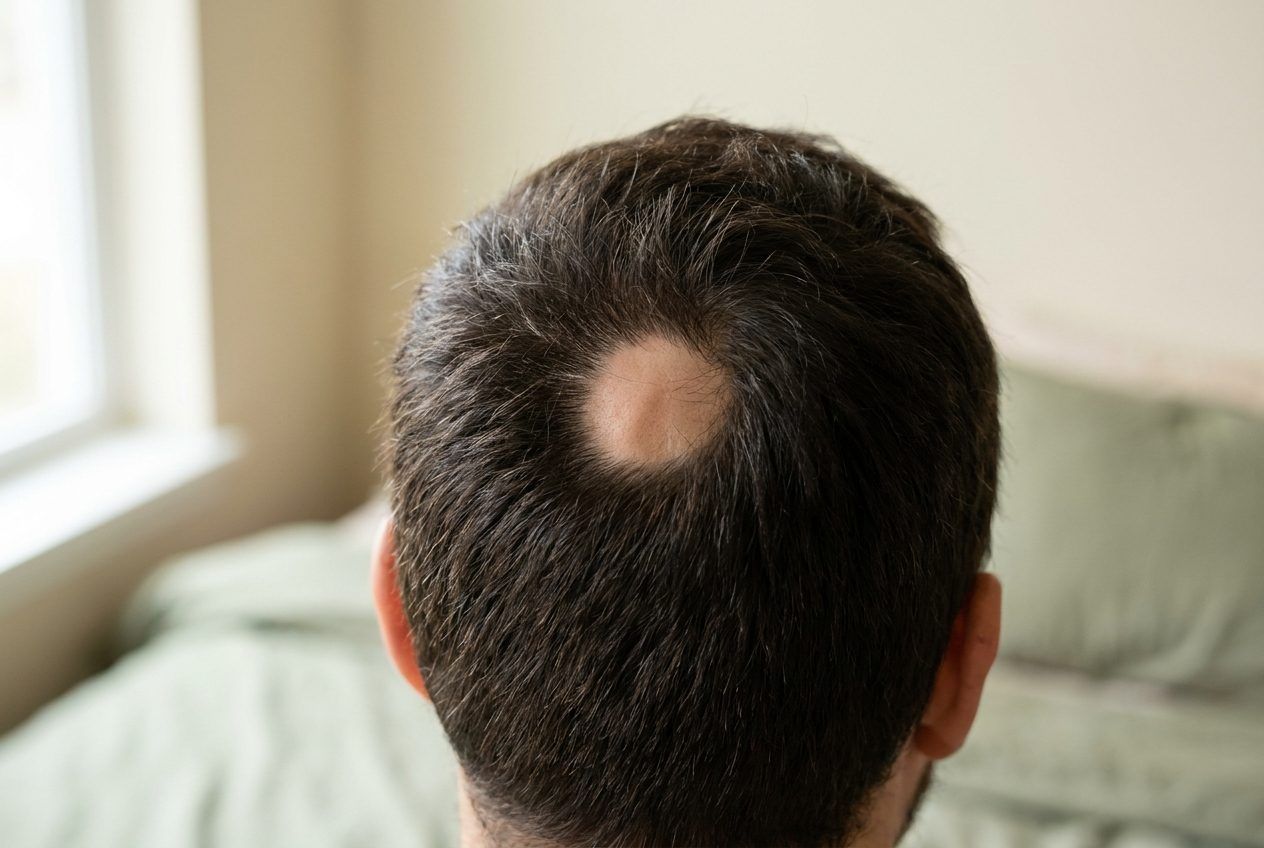
Alopecia areata is patchy autoimmune hair loss. NICE CKS calls it chronic, inflammatory and usually relapsing. The British Association of Dermatologists says there is no cure, and that mild patches may regrow without treatment. JAK inhibitors are not the first conversation for a single small patch, and they are not a treatment for male or female pattern hair loss.
This explainer was published on 16 October 2026 so the news collection has a date separate from the later roundup. The NICE dates above are the dates of the guidance, not the date we typed the page.
Common questions
Can I get ritlecitinib from my GP?
NICE recommendations of this kind are specialist pathways. Talk to a GP about referral if alopecia areata is severe. This page is not an application form.
What is a commercial arrangement?
The company supplies the drug to the NHS on terms NICE has accepted, often a confidential discount. The recommendation applies only when that supply happens.
Does baricitinib work but stay off the NHS?
It is licensed for this use in Great Britain. NICE did not recommend it for routine commissioning. Someone already taking it can continue until they and their clinician decide to stop. NICE does not give a response rate to quote as a promise.
Sources
Keep reading
-
-

-