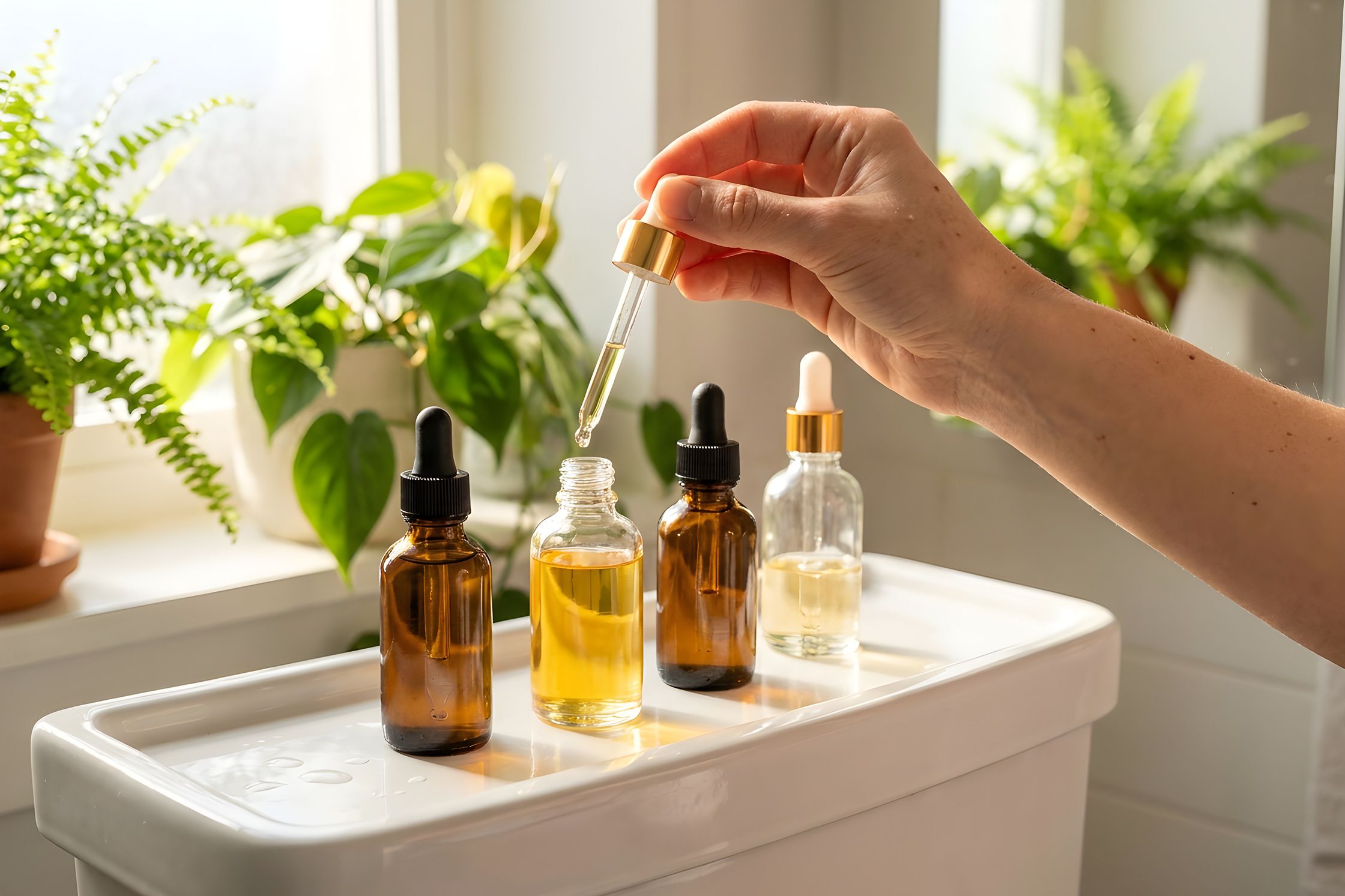
Topical treatments
What's in hair growth serums?
The bottle says growth. The label often hides the concentration. Here is how to read the ingredient, and what grade the evidence deserves.
A hair growth serum is usually a cosmetic, not a medicine. The ingredient with a UK licence for pattern hair loss is topical minoxidil, which is a pharmacy medicine, not a serum. Caffeine and rosemary have limited human data. Peptide names such as Redensyl, Capixyl, Procapil and AnaGain mostly lack an independent trial of the finished UK product, and the Advertising Standards Authority has already rejected some of those claims.
See a GP or doctor if hair loss is sudden, patchy, or comes with illness, a rash, or other symptoms. The NHS asks for that conversation before a private clinic.
On this page
On this page
Most hair growth serums are cosmetics with a growth claim on the front. The ingredient that is actually a UK medicine for pattern hair loss is minoxidil, sold as a foam or a solution, not as a “serum” in the cosmetic sense. Everything else on a typical dropper bottle has a thinner file: one human trial, an animal study, or a company summary the Advertising Standards Authority has already found wanting.
The grades below follow The Growth Check. A is a meta-analysis or more than one controlled trial. B is at least one controlled trial. C is a small or uncontrolled study. D is a brand claim or no human data we could verify. A grade for an ingredient is not a grade for every bottle that names it.
What is a serum allowed to claim?
The ASA and CAP advice on hair loss, updated on 5 October 2026, splits the words carefully. Claims that a product can prevent or cure baldness, hair loss or male pattern baldness are likely to be medicinal, because hair growth is a physiological function. Those claims may need a marketing authorisation from the MHRA. Claims that a product could slow or reduce hair loss, or promote or strengthen existing growth, are less likely to be treated as medicinal. They still need robust evidence.
The same advice says that, to date, neither the ASA nor CAP has seen evidence that any product can treat chronic telogen effluvium, the long-running shed. A serum that promises to stop “hair shedding” in that sense is claiming something the regulator’s own copywriters say they have not seen substantiated.
CAP also names the two authorised treatments it understands for androgenetic alopecia: finasteride, which is prescription-only, and minoxidil, which can be an external pharmacy product or a stronger prescription-only medicine. Advertisers must not imply that a whole clinic package is proven just because minoxidil is one item in it.
Minoxidil, which is not a serum
Grade A for the medicine, as a class. A 2017 meta-analysis and the licensing trials sit behind the 2% and 5% products. NICE CKS describes the men’s 5% solution and foam. The NHS names minoxidil for pattern hair loss in men and women. It does not work for everyone, and the benefit stops when you stop.
That grade does not transfer to a cosmetic serum that lists “minoxidil-like” peptides, and it does not transfer to an unlicensed 10% liquid. The licensed foams and solutions are compared on best minoxidil. The argument about higher strengths is minoxidil strengths.
Caffeine
Grade C. There is a published human study of a caffeine liquid, Dhurat and colleagues in 2017, which is why a leave-on caffeine product is discussed on the shampoo page at all. A shampoo is a different product from that liquid, rinsed off rather than left on. The ASA, in 2018, upheld a complaint against a caffeine shampoo’s “reduce hair loss” claim. The advertiser had studies and a survey. The ASA still decided the file was not sufficient: problems included a missing control group, studies that were not about the product, and weak methods.
So caffeine is not “no data”, and it is not a licensed hair-loss medicine. A bottle that prints neither the caffeine concentration nor a trial of that finished formula is asking you to trust the word.
Rosemary
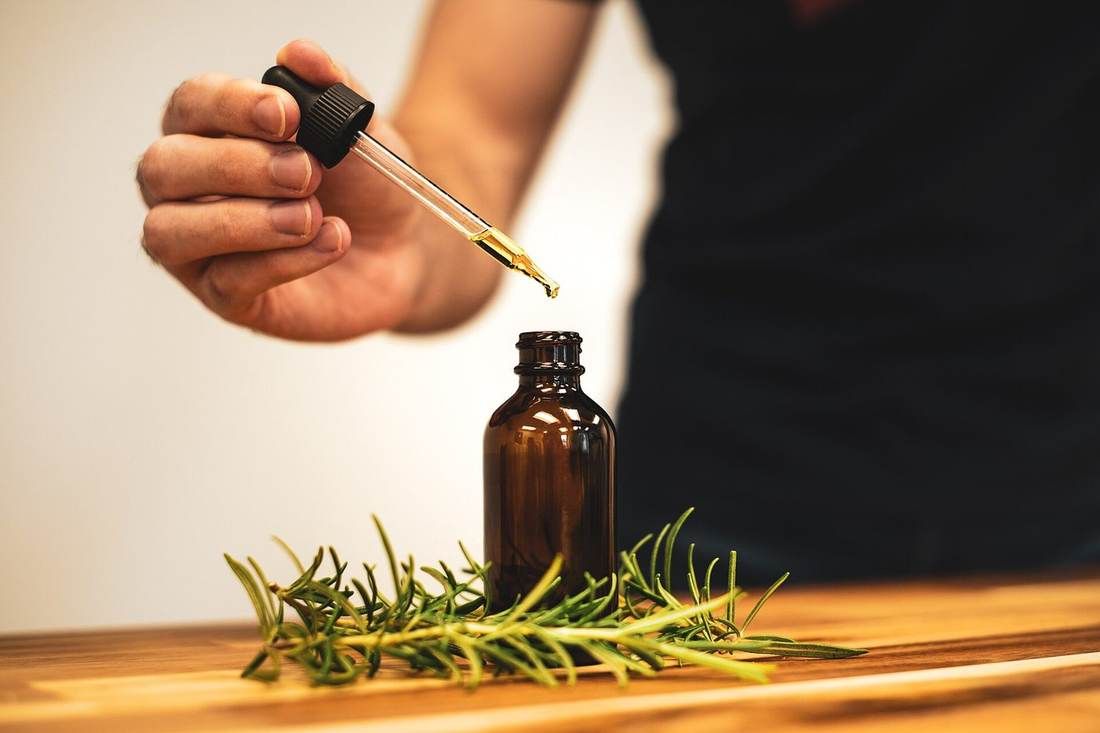
Grade B. Panahi and colleagues randomised 50 people to rosemary oil and 50 to minoxidil 2% for six months. Both groups had higher hair counts at six months than at the start. The groups were not significantly different from each other. Itch was more common with minoxidil. Neither group had moved much at three months. One trial, against 2% rather than against 5%, is the whole human file this site relies on. The write-up is rosemary oil. A drop of rosemary in a long ingredient list is not that trial.
Peptide complexes
Grade D for the way they are sold in the UK, until a finished product shows otherwise.
Redensyl, Capixyl, Procapil and AnaGain are trade names. This page does not quote a percentage improvement for any of them. The figures that circulate come from small studies, often summarised by the company that supplies the ingredient, and the concentration in a shop bottle is often missing. Without the concentration, you cannot know whether the bottle matches the study.
The ASA has already walked through two of these files. In 2019 it upheld a complaint about a “Volume & Growth Elixir” whose advertiser relied on a summary of a study of AnaGain. The ASA had problems with the methodology and the design, and the summary was not enough. In 2022 it looked at “helps stimulate growth”, “helps reduce thinning” and “thicker hair goals” for a scalp product built around Redensyl. The claims were treated as non-medicinal. The evidence, a mix of laboratory tests and clinical assessments, was still insufficient: too few subjects, a narrow sex mix, and subjective surveys used to support objective claims.
That is the standard a serum has to clear. A manufacturer slide is not it. If a later product publishes a controlled trial of the finished formula, in people, with the concentration on the label, the grade can move. The Growth Check is how this site would score that product. It has not been scored here, because this page is about ingredients, not a shopping list.
Growth-factor and “stem” claims
Grade D. Claims that a serum contains growth factors, exosomes or stem-cell extracts, and that those regrow pattern hair, are not backed by a trial this page can cite. The ASA’s rule still applies: a physiological claim needs an MHRA conversation, and a softer “promote growth” claim still needs robust human evidence. A laboratory photograph of cells is not a scalp.
How to read the label without wasting the bottle
Three questions, in order.
What is the concentration of the ingredient the front of the bottle boasts about? If it is absent, the study you are being shown may have used a different dose.
Was the trial done on this finished product, on human scalps, with a comparison group? A test on hair fibres in a dish, or a survey of customers, is a different thing. The ASA has said so in the rulings above.
Who paid, and can you read the paper rather than a paragraph on the product page? A company-funded study can still be valid. A company paragraph that never links the study is not something you can check.
Photographs need the same scepticism. The ASA says before-and-after pictures must reflect the results of the product. Lighting, hair length and a new parting are free, and they are not a trial.
Where this leaves a pharmacy shop
If the aim is pattern hair loss, start with the licensed medicine and the diagnosis, not the serum aisle. Does minoxidil work? is that medicine. A flaky, itchy scalp is a dandruff question, and the NHS names ketoconazole and other anti-dandruff washes for that, which is the shampoo page. Sudden or patchy loss is a GP appointment before any dropper.
Men and women can both be sold the same cosmetic serum. The licence for minoxidil is not identical for both, which is why the product page splits them. A serum that ignores that split is another sign it is marketing, not a medicine.
Common questions
Is a hair growth serum the same as minoxidil?
No. Minoxidil is a medicine with a UK licence for pattern hair loss. A serum marketed as a cosmetic can contain plant extracts, caffeine or peptides. It is not the same legal object, and it does not inherit minoxidil’s trials.
Do Redensyl, Capixyl, Procapil or AnaGain regrow hair?
This page does not quote a success percentage for them. The published human data are small and often run or summarised by the company that sells the ingredient, and UK bottles often omit the concentration. The ASA has upheld complaints where the evidence file for these kinds of claims was not enough.
What does the ASA allow a serum to say?
Claims to prevent or cure baldness are likely to be medicinal and may need an MHRA licence. Claims to slow hair loss or promote growth may be non-medicinal, but the advertiser still needs robust evidence. The ASA says it has not seen evidence that a product treats chronic telogen effluvium.
How should I read the label?
Look for the concentration, a trial of the finished product rather than a single ingredient in a dish, and who paid for the trial. A before-and-after photo without those three is an advertisement.
Sources
Keep reading
-
-

-
-

-
-