Causes
What is telogen effluvium?
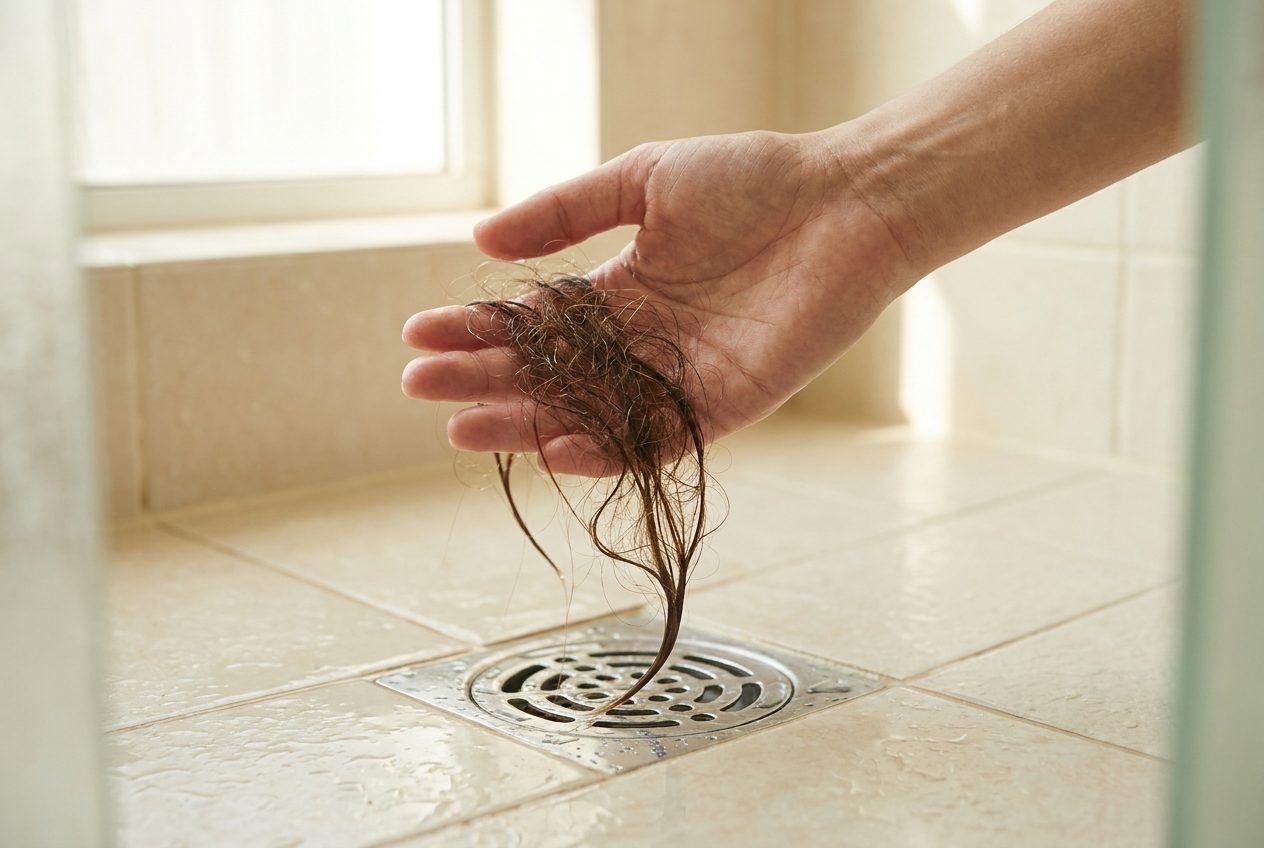
A lot of hair in the shower, weeks to months after the body had a shock. Often temporary. Not always the only thing going on.
Written in the UK, for women and men.
Telogen effluvium is a shed: more hairs than usual leave the scalp because illness, stress or a major body change has disrupted the growth cycle. The British Association of Dermatologists says it is unusual for the thinning to be severe enough to need a wig. It can sit alongside pattern hair loss. There is no single recovery month.
See a GP if hair loss is sudden, patchy, or comes with illness, a rash, or other symptoms. The NHS asks for that conversation before a private clinic.
On this page
On this page
Telogen effluvium is the name for a particular kind of shed. Hairs cycle through growth, a short transition, and a rest. In the rest, telogen, the hair can fall. A shock pushes more hairs into that rest together, so they later fall together.
What sets it off?
The British Association of Dermatologists says more hair falls because illness, stress or major body changes disrupt the cycle. The NHS lists temporary causes that match: an illness, stress, cancer treatment, weight loss and iron deficiency. Giving birth is one of those body changes. It has its own page, postpartum hair loss, because the timing is what people recognise.
It is unusual, the dermatologists’ leaflet says, for the thinning to be bad enough to need a wig. If a wig is prescribed by a consultant, the NHS may ask for a financial contribution. Support, if you want other people who have been through hair loss, includes Alopecia UK.
Can it be pattern loss as well?
Yes. The leaflet says telogen effluvium can coexist with pattern hair loss. A shed can reveal a parting that was already widening. Treating only the shed, or only buying a supplement, misses that. A GP is the person who separates them, especially if you are also tired, losing weight, or have a thyroid history.
What helps while you wait?
Look for the trigger you can actually change: iron deficiency if a blood test shows it, a diet that collapsed, a scalp that is inflamed. There is no NHS tablet whose job is “telogen effluvium” in the way finasteride’s job is male pattern loss. Time and recovery are the usual story. There is no single month when it ends.
Minoxidil is sometimes discussed by specialists. It is still the pattern-loss medicine, with the limits on does minoxidil work. A red light hat is not a treatment for an acute shed. If pattern loss is the long-term issue, the device pages live under devices.
Common questions
Is telogen effluvium permanent?
The NHS says hair loss from a medical condition usually stops or grows back once you have recovered. The British Association of Dermatologists does not promise a date. Pattern loss can continue underneath.
How much shedding is normal?
The NHS says people can lose 50 to 100 hairs a day, often without noticing. Telogen effluvium is a step up from that, enough that you see it.
Do I need a wig?
The British Association of Dermatologists says it is unusual for the thinning to need one. NHS wigs, when they are appropriate, can require a financial contribution and a consultant prescription.
Sources
Keep reading
-
-

-

-