Guides
What works without a prescription in the UK?
A ladder for UK pharmacies, in evidence order. The prescription tablet people bolt onto American lists is not a shelf product here.
We compare hats on wavelengths, published output, coverage, session time, published clinical evidence, UK price, warranty and returns. How we review.
The non-prescription treatment with the strongest UK evidence for pattern hair loss is topical minoxidil, which you buy from a pharmacy. Low-level red light and laser devices have sham-controlled trials but are not NHS treatment. Ketoconazole is an NHS dandruff wash, not a baldness cure. Microneedling has been studied with minoxidil, not instead of it. Supplements help when a blood test shows a shortfall. Finasteride is prescription-only.
See a GP or doctor if hair loss is sudden, patchy, or comes with illness, a rash, or other symptoms. The NHS asks for that conversation before a private clinic.
On this page
On this page
Licensed minoxidil first, if what you have is pattern hair loss and you want something from a pharmacy. Then the devices that have sham-controlled trials, if you want a gadget and you will use it for months. Then a medicated shampoo if the scalp is flaky, because that is a skin problem with its own NHS advice. Microneedling only makes sense in the way it was studied, alongside minoxidil. Supplements only when a test shows you are short of something. Finasteride is not on this ladder, because you cannot buy it as a general-sale hair treatment in the UK.
Grades follow The Growth Check: A for a meta-analysis or more than one controlled trial, B for at least one controlled trial, C for a small or uncontrolled study, D for a brand claim or no human data. A grade for a class of treatment is not a grade for every bottle in that class.
Minoxidil
Evidence grade A for topical minoxidil as a class. A 2017 meta-analysis and the licensing record sit behind it. The NHS names it for male pattern baldness and says it can be used for female pattern baldness. NICE CKS says it is not usually prescribed in NHS primary care for male pattern loss. You buy it, or you pay for a private prescription.
The May 2026 prescribing page describes 5% solution for men aged 18 to 65 and 5% foam for men aged 18 to 49. Women’s once-daily 5% foam and the 2% solution are the pharmacy options aimed at women. Prices checked on 18 October 2026, and the leaflet cautions, are on best minoxidil. Whether it works, and for whom it does not, is does minoxidil work. The shed and the stop dates are the timeline. Ten percent is not a licensed strength on the NICE page, so it is not step one. That argument is minoxidil strengths.
The British Association of Dermatologists says to judge 5% liquid or foam over 6 to 12 months, and that the benefit continues only while you use it. NICE’s own stop dates are earlier for some packs. Read the pack you bought.
Low-level light devices
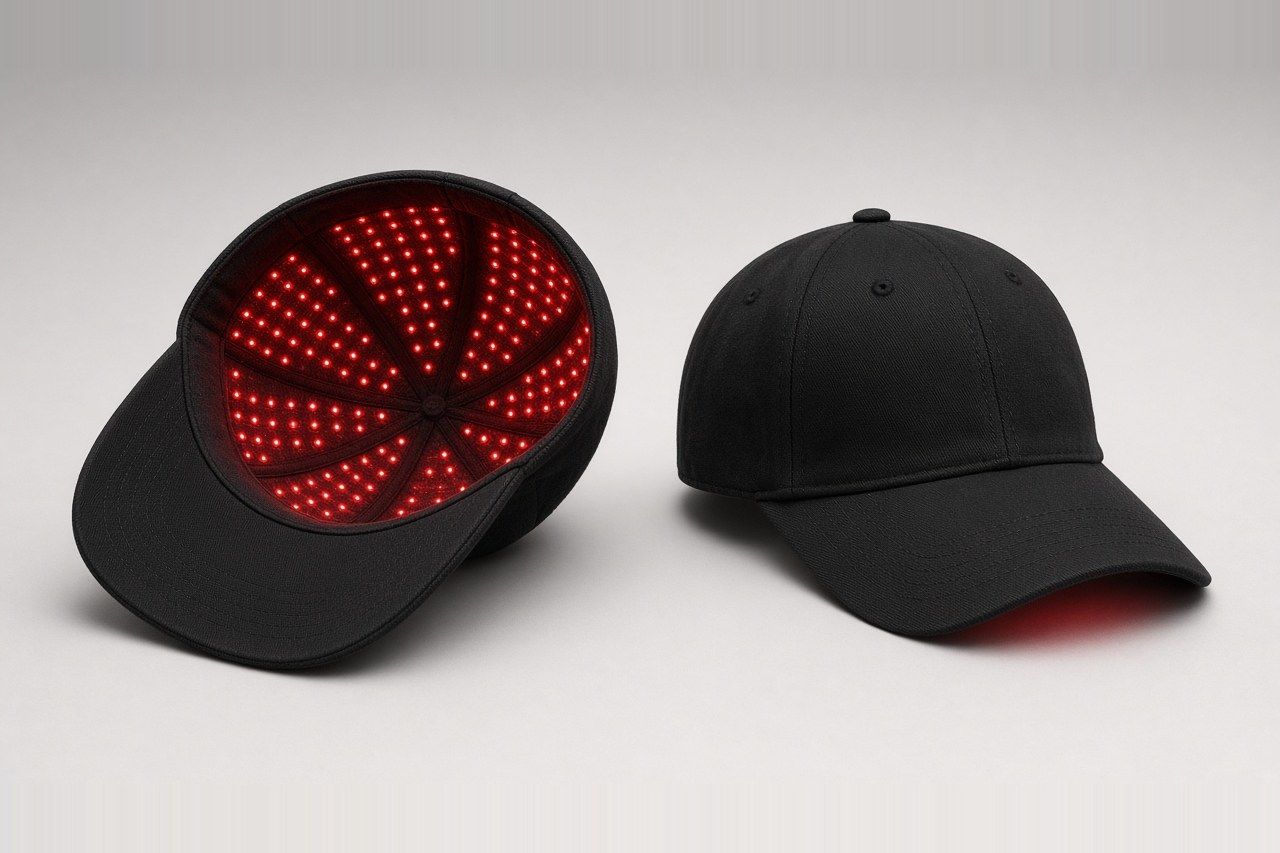
Evidence grade A for low-level laser or red light as a class in pattern hair loss, with a large asterisk. Liu and colleagues pooled double-blind trials and found higher hair density than with sham devices. Perez and colleagues found the same direction of effect, with high heterogeneity, over studies that often ran 16 to 26 weeks. The device on a shop shelf was not automatically the device in those papers.
These are not NHS treatments. You pay for them yourself. The comparisons are red light hats and laser caps and combs. How long to use one is session length. A clinic course versus a box at home is clinic or home. None of those pages is a reason to skip a GP if the loss is sudden or patchy.
Ketoconazole, if the scalp needs it
The hair-growth claim is not grade A. The dandruff use is NHS advice.
The NHS dandruff page names ketoconazole among the shampoos for dandruff and seborrhoeic dermatitis. That is a scalp-skin treatment. A small body of hair research exists and is discussed on best shampoo for hair loss. It does not turn a wash into the medicine minoxidil is. Use it when the scalp is flaky or itchy, for the reason the NHS gives, and do not expect a shampoo to replace a pattern-hair-loss treatment.
Caffeine shampoos and peptide serums are cosmetics. The ingredient file, including ASA rulings, is hair growth serums.
Microneedling with minoxidil
Evidence grade B for the combination studied in men, not for a roller on its own.
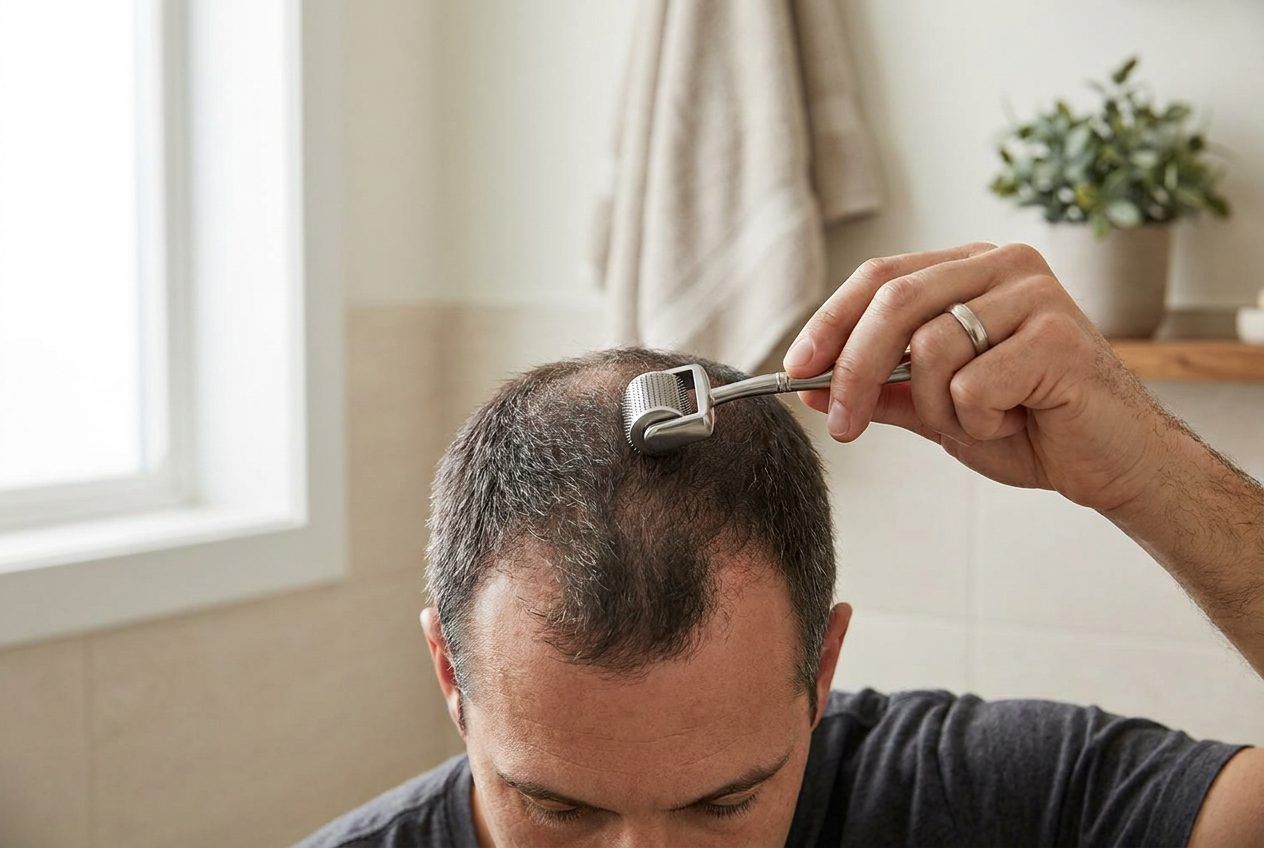
Dhurat and colleagues ran a 12-week pilot in 100 men. Weekly microneedling plus 5% minoxidil increased mean hair count more than minoxidil alone. It was a pilot, in men, with a clinic protocol. A network meta-analysis later put microneedling among the options compared with minoxidil and PRP. Neither paper is a licence for a shared or dirty home roller, or for needling a bald patch that might be alopecia areata. The practical page is microneedling.
Supplements, only for a shortfall
No blanket grade. Iron, vitamin D and the rest score on the test in front of you, not on the tub.
The NHS treats diagnosed deficiencies. It does not list a multivitamin as a pattern-hair-loss drug. Iron deficiency is the page that starts from a blood test. Biotin and the wider supplement guide say when a product matches a trial and when it is just a recipe. Buying them “in case” is how this ladder gets more expensive than minoxidil without the evidence.
The big 3, translated into UK rules
American answers often say the big three are minoxidil, finasteride and ketoconazole, or minoxidil, finasteride and microneedling. Two of those can be pharmacy or device choices. Finasteride cannot.
Finasteride for male pattern hair loss is a prescription-only medicine. NICE CKS says the 1 mg strength is not usually prescribed in NHS primary care. Women should not use it. The side-effect page, using the generic name only, is finasteride side effects. A GP or another registered prescriber is who discusses it. This page does not name a brand, a dose to copy, or an online clinic.
Oral minoxidil is also a prescription medicine, used off label when a specialist chooses it. No brand and no dose here. The explainer is oral minoxidil.
Dutasteride is licensed for prostate enlargement, not for hair. That distinction is on the medical treatments hub.
What a month of this actually costs
This page does not print a fresh price list. The figures go stale, and a made-up monthly average would be worse. Use the dated prices already on the product pages.
Licensed minoxidil foams and solutions, including the men’s foam checked at £55 for three months on 18 October 2026, are on best minoxidil. Divide the pack by the months it covers if you want a monthly figure, and read the age and sex on the box before you treat that pack as yours. A 10% product is not in that table.
Home light devices are dearer on day one and then have no monthly medicine. The stickers, warranties and the date they were checked are on red light hats and laser caps and combs. A device you abandon in week three has an ugly monthly cost, because you paid for months you did not use.
Ketoconazole and the other dandruff washes are pharmacy prices on the shampoo page. They are cheap relative to a device and they are for flakes. A serum with a peptide name and no concentration is on the serum page precisely so you can decide not to add it to the monthly total.
Supplements are the step that quietly overtakes the medicine. If a blood test is normal, the monthly tub is optional spending, not a rung you failed to climb. If a test is low, the GP’s replacement dose matters more than a hair-branded multivitamin.
What this ladder will not do
It will not diagnose you. A widening parting, a receding hairline, a shed after illness, and a smooth bald patch are different problems. Start with causes if you are not sure which, and with a GP if you are worried. Men and women collect the pages that match those patterns.
It will not beat a treatment you then abandon. Minoxidil and a light device both ask for months. A week of everything, followed by a new serum, is not the ladder. It is shopping.
Common questions
What is the first over-the-counter treatment for pattern hair loss?
Topical minoxidil. NICE CKS describes 5% solution and 5% foam for men, bought from a pharmacy rather than issued as routine NHS prescribing. Women have a licensed once-daily 5% foam and a 2% solution. It does not work for everyone, and it only works while you use it.
What do people mean by the big 3?
Online, the phrase usually bundles minoxidil, finasteride, and either a ketoconazole wash or microneedling. Finasteride is prescription-only in the UK. It is a conversation with a GP or another registered prescriber, not a basket item. This page does not name a brand or a clinic for it.
Do supplements regrow pattern hair?
Not as a substitute for the medicine above. The NHS points to diet and to treating a diagnosed deficiency, such as iron deficiency. A tub of biotin for someone who is not deficient is not an NHS hair-loss treatment.
When do I stop self-treating and see a GP?
If the loss is sudden, patchy, or comes with illness, a rash, tiredness or weight change. Also if a pharmacy product is not suitable because of pregnancy, heart disease, or an inflamed scalp. The NHS asks for a GP conversation before a private clinic.
Sources
- NICE advice on topical minoxidil, last revised May 2026
- Managing male pattern hair loss (NICE CKS)
- NHS, Hair loss
- British Association of Dermatologists, Male pattern hair loss leaflet
- Adil and Godwin, 2017 meta-analysis
- Liu and colleagues, 2019, and Perez and colleagues
- Dandruff, NHS
- Dhurat and colleagues, 2013 microneedling pilot
Keep reading
-
-
-
-

-

-
-